

Occupational Rhinitis: When Your Job Dust or Chemicals Trigger Permanent Allergies
Written by: Dr. Muhammad Ihsan Ullah, PhD
Medically reviewed by: Dr. Jamal ud Din Khan, FCPS
Last updated on September 28, 2026

Have you ever noticed that your nose becomes blocked, itchy, or constantly runny during work but improves when you leave the workplace? For some workers, the environment where they spend most of their day can become the hidden cause of persistent nasal problems.
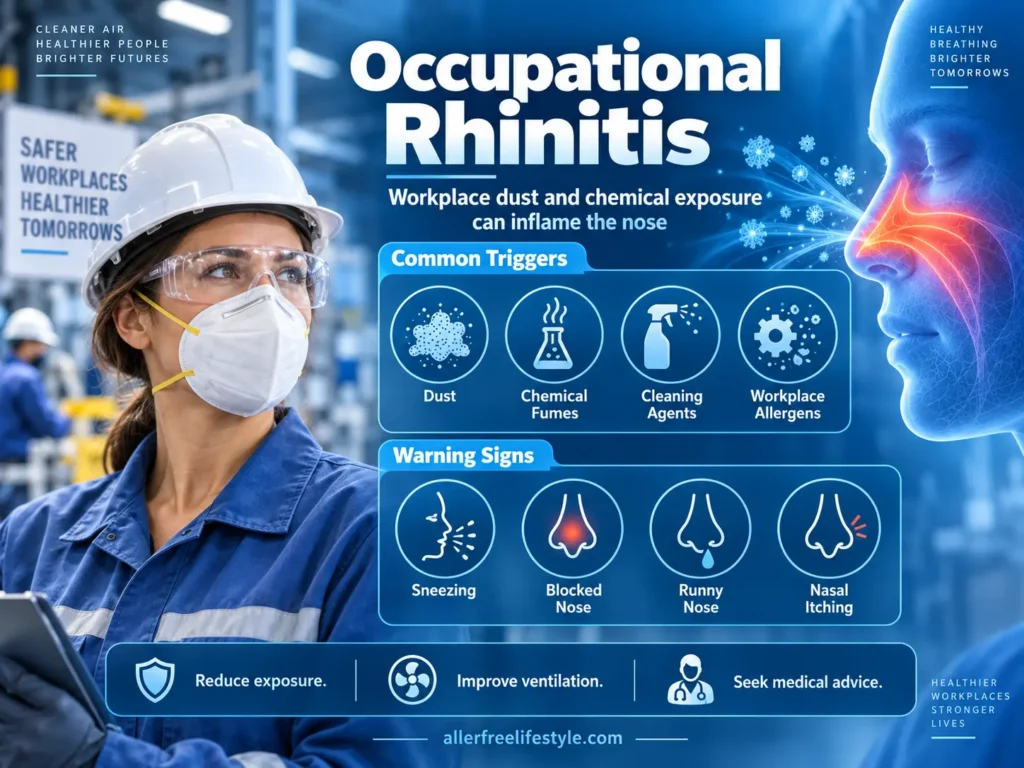
Occupational rhinitis is a work-related inflammatory condition of the nose caused by exposure to workplace allergens, dust, fumes, vapours, or chemicals. It can affect employees in many industries, including healthcare, construction, manufacturing, cleaning, agriculture, food production, and laboratories.
Unlike ordinary seasonal allergies, occupational rhinitis follows a specific exposure pattern connected to the workplace. Recognising this relationship is important because early identification and exposure control may help reduce symptoms and protect long-term respiratory health (1).
Occupational rhinitis is inflammation of the nasal passages triggered by workplace substances such as dust particles, chemical fumes, vapours, or biological allergens. It may cause sneezing, nasal congestion, itching, and a runny nose that often improves when a person is away from the triggering environment. Identifying the workplace cause and reducing exposure are important steps in preventing ongoing nasal inflammation.
What Is Occupational Rhinitis and How Does Work Exposure Trigger Allergies?
Occupational rhinitis occurs when substances encountered during work cause inflammation inside the nasal lining. The nose acts as the first protective barrier against airborne particles, meaning it is continuously exposed to workplace contaminants.
The condition can develop through different mechanisms:
- Allergic occupational rhinitis occurs when the immune system becomes sensitised to a workplace substance and produces an allergic response.
- Irritant-induced occupational rhinitis occurs when chemicals, fumes, or high concentrations of dust directly damage or irritate nasal tissues.
Common symptoms include:
- Nasal blockage or congestion
- Frequent sneezing
- Runny nose
- Nasal itching
- Postnasal drainage
- Difficulty breathing comfortably through the nose
Occupational rhinitis is considered an underrecognized workplace disease because many workers continue exposure without realizing that their job environment is contributing to their symptoms (1).
Why Do Allergy Symptoms Improve When You Leave the Workplace?
One of the strongest clues of occupational rhinitis is the relationship between symptoms and workplace exposure.
Many affected workers notice a pattern where:
- Symptoms become worse during working hours
- Nasal problems increase throughout the workweek
- Symptoms improve during weekends or vacations
- Symptoms return after returning to work
This happens because repeated exposure keeps stimulating inflammation within the nasal mucosa. When exposure stops, the inflammatory response may decrease, allowing symptoms to improve.
However, temporary improvement away from work does not always mean the problem has disappeared. Continued exposure without identifying the trigger may allow inflammation to continue and may increase the risk of more persistent respiratory problems.
Occupational Rhinitis vs. Allergic Rhinitis vs. Irritant Rhinitis: What Is the Difference?
Feature | Occupational Rhinitis | Allergic Rhinitis | Irritant Rhinitis |
Main trigger | Workplace allergens or irritants | Environmental allergens such as pollen or dust mites | Chemical fumes, smoke, and strong odors |
Exposure pattern | Mainly linked to job environment | Can occur anywhere the allergen exists | Usually appears after direct irritation exposure |
Immune involvement | May involve allergic sensitization | Usually involves IgE-mediated allergy | Usually does not involve classic allergy pathways |
Common examples | Flour dust, wood dust, latex, laboratory allergens | Pollen, pets, mold, dust mites | Bleach fumes, solvents, industrial vapors |
Symptom improvement | Often improves away from workplace | Depends on allergen avoidance | Improves after removing irritant exposure |
Understanding these differences helps healthcare professionals determine whether nasal symptoms are caused by workplace exposure or another form of rhinitis.
Can Workplace Dust Cause Chronic Nasal Allergies?
Workplace dust exposure is one of the important causes of occupational rhinitis. Different industries expose workers to airborne particles that can irritate nasal tissues or trigger immune reactions.
Common dust-related workplace exposures include:
- Wood dust from carpentry and furniture industries
- Flour dust in bakeries
- Grain dust in agricultural work
- Textile fibers
- Construction materials
- Animal-derived particles
- Industrial manufacturing dust
Small airborne particles can enter the nasal passages and activate inflammatory pathways. Workers who experience repeated exposure may develop ongoing congestion, sneezing, and nasal discomfort if protective measures are inadequate.
The risk depends on the type of dust, concentration of exposure, duration of contact, and individual susceptibility (1).
Can Chemical Fumes Cause Chronic Nasal Congestion?
Chemical exposure is another major contributor to workplace-related nasal symptoms. Certain substances can directly irritate the nasal lining, while others may trigger an immune response.
Common chemical triggers include:
- Formaldehyde
- Chlorine-containing products
- Cleaning agents
- Solvents
- Industrial vapors
- Volatile organic compounds (VOCs)
Workers exposed to vapors, gases, dusts, and fumes may have an increased risk of developing rhinitis symptoms. Chemical exposure has also been associated with increased risk of work-related airway conditions, including rhinitis and asthma (2).
Which Jobs Commonly Increase the Risk of Occupational Rhinitis?
Some occupations involve greater exposure to airborne allergens and irritants.
Healthcare Workers
Potential triggers include:
- Latex materials
- Disinfectants
- Cleaning chemicals
- Medication-related substances
Construction Workers
Potential triggers include:
- Cement dust
- Wood particles
- Silica-containing materials
- Industrial chemicals
Bakers and Food Industry Workers
Potential triggers include:
- Flour dust
- Food proteins
- Enzymes
Cleaning and Maintenance Workers
Potential triggers include:
- Bleach
- Ammonia
- Detergents
- Chemical sprays
Laboratory Workers
Potential triggers include:
- Animal allergens
- Chemical reagents
- Biological materials
Recognizing workplace risks allows earlier evaluation and better prevention strategies for exposed workers.
How Do Doctors Diagnose Occupational Rhinitis?
Diagnosing occupational rhinitis requires more than identifying nasal symptoms. A detailed evaluation of the relationship between symptoms and workplace exposure is essential.
A healthcare professional may review:
- Type of occupation and daily tasks
- Workplace substances and exposure duration
- Timing of symptoms during work and non-work periods
- Improvement during weekends or holidays
- Previous allergy history
Possible diagnostic methods may include:
- Skin prick testing to identify specific allergens
- Specific IgE blood testing when an allergic mechanism is suspected
- Nasal airflow measurements
- Nasal provocation testing in specialized centers
Nasal provocation testing may help confirm whether a specific workplace substance triggers nasal inflammation when the diagnosis remains uncertain. A complete occupational history remains one of the most important parts of diagnosis because workplace-related symptoms can resemble other forms of rhinitis (3).
Can Occupational Rhinitis Become Permanent?
The long-term effects of occupational rhinitis depend on several factors, including the type of exposure, duration of contact, severity of inflammation, and how quickly the workplace trigger is identified.
Some workers experience significant improvement after exposure reduction or removal from the triggering environment. Others may continue to have symptoms if nasal inflammation becomes persistent or if exposure continues for a long period.
Factors that may influence long-term outcomes include:
- Continuous exposure to allergens or irritants
- High levels of workplace contaminants
- Delayed diagnosis
- Individual sensitivity
- Lack of protective measures
Occupational rhinitis should not be ignored because ongoing inflammation may affect quality of life and can occur alongside other work-related airway diseases (1).
How Can Workplace Allergies From Dust and Chemicals Be Prevented?
The most effective approach to managing occupational rhinitis is controlling exposure to the triggering substance.
Important workplace prevention strategies include:
- Improving ventilation systems
- Reducing dust generation at the source
- Using appropriate respiratory protection
- Following chemical handling procedures
- Replacing harmful substances when possible
- Maintaining proper workplace hygiene
- Reporting unsafe exposure conditions
Personal protective equipment can help reduce contact with airborne substances, but the best prevention strategy is reducing exposure before the substance reaches the worker.
For individuals with persistent symptoms, medical evaluation can help determine whether workplace modification, additional protection, or changes in exposure are needed.
Can Occupational Rhinitis Lead to Occupational Asthma?
The nose and lungs are closely connected parts of the respiratory system. Because they share similar inflammatory pathways, occupational rhinitis and occupational asthma may occur together.
Workers with occupational rhinitis should pay attention to additional respiratory symptoms such as:
- Work-related coughing
- Wheezing
- Chest tightness
- Shortness of breath
Early recognition of nasal symptoms may provide an opportunity to identify workplace hazards before more serious lower airway problems develop.
Research suggests that occupational rhinitis may act as an early indicator of broader airway inflammation, making proper assessment and workplace exposure control important for respiratory protection (2).
Key Takeaway
Occupational rhinitis is a genuine workplace-related health condition that can affect people exposed to dust, chemical fumes, vapors, and biological allergens.
If nasal congestion, sneezing, or irritation repeatedly appears during work and improves away from the workplace, the environment may be contributing to the problem.
Identifying the responsible exposure, receiving appropriate medical evaluation, and reducing workplace triggers can help protect long-term nasal and respiratory health.
Medical Disclaimer
This article is intended for educational purposes only and does not replace professional medical advice, diagnosis, or treatment. If you experience persistent nasal symptoms related to workplace exposure, consult a qualified healthcare professional or occupational medicine specialist for proper evaluation and personalized guidance.
Frequently Asked Questions
What is occupational rhinitis?
Occupational rhinitis is inflammation of the nasal passages caused by workplace exposure to allergens or irritants such as dust, chemicals, fumes, or biological particles.
Can workplace dust cause permanent nasal allergies?
Repeated exposure to workplace dust may contribute to persistent nasal inflammation, especially when the triggering exposure continues for a long time.
Why do my allergy symptoms improve when I leave work?
Improvement during weekends, vacations, or time away from work may indicate that workplace exposure is contributing to nasal irritation or allergic inflammation.
Which chemicals can trigger occupational rhinitis?
Chemical substances such as formaldehyde, chlorine-containing products, solvents, and cleaning agents may irritate the nasal lining and contribute to work-related rhinitis.
Can occupational rhinitis lead to asthma?
Occupational rhinitis and occupational asthma can occur together because both conditions involve airway inflammation related to workplace exposure.
References
- Zamora-Sifuentes J, Poole JA. Occupational Rhinitis: An Update. Current Allergy and Asthma Reports. 2023;23(10):489–498. doi:10.1007/s11882-023-01094-8.
- Schyllert C, Rönmark E, Andersson M, et al. Occupational exposure to chemicals drives the increased risk of asthma and rhinitis observed for exposure to vapours, gas, dust and fumes: a cross-sectional population-based study. Occupational and Environmental Medicine. 2016;73(10):663–669. doi:10.1136/oemed-2015-103488.
- Ronsmans S, Vandenplas O. Diagnostic approach to occupational rhinitis: the role of nasal provocation testing. Current Opinion in Allergy and Clinical Immunology. 2020;20(2):119–125. doi:10.1097/ACI.0000000000000617.