

Why Do My Allergies Make Me Nauseous in the Morning?
The Science Behind Allergy-Related Morning Nausea
Written by: Dr.Muhammad Ihsan Ullah, PhD
Medically reviewed by: Dr. Jamal ud Din Khan, FCPS
Last updated on August 15, 2026

Waking up with nausea can be unpleasant, especially when it occurs alongside allergy symptoms such as nasal congestion, sneezing, itchy eyes, throat irritation, or excessive mucus. If you have ever wondered, “Why do my allergies make me nauseous in the morning?” the reason may be linked to the way your immune system responds to allergens while you sleep.
Although nausea is not considered a classic allergy symptom, allergic reactions can create conditions that contribute to morning queasiness. Increased mucus production, postnasal drainage, overnight allergen exposure, and inflammation caused by allergic rhinitis may all play a role.
Quick Answer: Why Allergies May Cause Morning Nausea
Allergies may contribute to morning nausea when the immune system’s response to allergens increases nasal inflammation and mucus production during sleep. Overnight drainage of mucus into the throat and stomach, especially with allergic rhinitis or postnasal drip, may create a feeling of queasiness after waking.
Can Allergies Cause Nausea in the Morning?
Yes, allergies can cause nausea in the morning for some individuals, usually through indirect effects rather than directly affecting the stomach.
When the body encounters allergens such as pollen, dust mites, mold, or pet dander, the immune system activates an allergic response. In people with allergic rhinitis, allergen exposure can trigger IgE-mediated immune activity, mast cell activation, and release of inflammatory chemicals such as histamine. These reactions increase nasal swelling, mucus production, and congestion (1).
During sleep, mucus may gradually move from the nasal passages into the throat, a process commonly known as postnasal drip. When swallowed repeatedly, this mucus may contribute to throat irritation, stomach discomfort, or a nauseous sensation after waking.
Why Do I Wake Up Nauseous When I Have Allergies?
Many people experience allergy-related nausea mainly in the morning because the body has been exposed to triggers for several hours during sleep.
When you lie down:
- Nasal drainage becomes less efficient because gravity no longer helps clear mucus.
- Mucus can collect in the back of the throat.
- Congestion may become more noticeable after several hours of breathing indoor allergens.
- Swallowed mucus may irritate sensitive stomachs.
This is why some people wake up feeling congested, need to clear their throat, or experience a mild nauseous feeling that improves after getting up and clearing nasal secretions.
How Can Postnasal Drip From Allergies Trigger Morning Nausea?
Postnasal drip is one of the most common links between allergies and morning nausea.
Allergic rhinitis can stimulate excess mucus production. Instead of leaving the body through the nose, some mucus drains backward into the throat and is swallowed.
This may cause:
- A sensation of mucus stuck in the throat
- Frequent throat clearing
- Morning coughing
- Bad taste in the mouth
- Gagging sensations
- Mild nausea
People with existing digestive sensitivity or acid reflux may notice these effects more strongly because throat and stomach irritation can overlap.
Why Are My Allergy Symptoms Worse in the Morning?
Morning allergy symptoms are often related to overnight exposure to allergens in the sleeping environment.
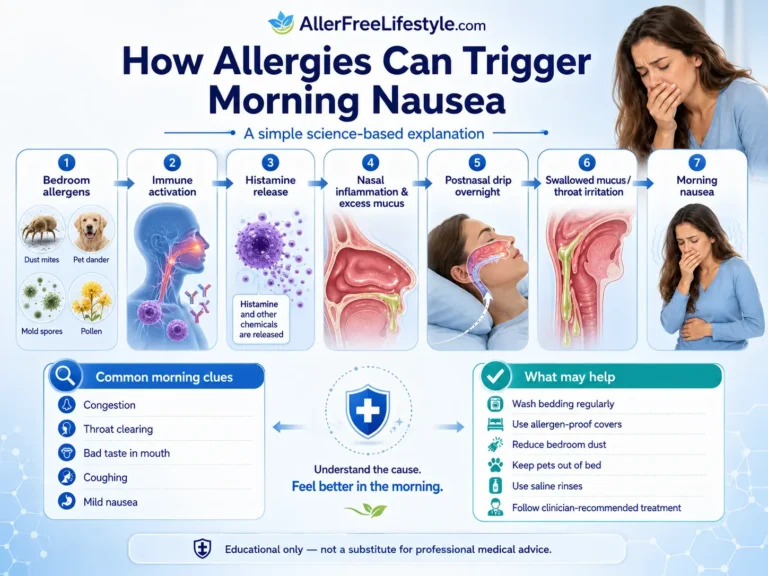
Common bedroom triggers include:
- Dust mites:Common allergens found in mattresses, pillows, and bedding
- Pet dander:Microscopic skin particles that can remain on fabrics and furniture
- Mold spores:More common in damp or poorly ventilated areas
- Pollen:Can enter through open windows or remain on hair and clothing
The immune system also follows natural daily rhythms, and inflammatory activity may fluctuate over a 24-hour cycle. These changes can make nasal congestion, mucus production, and allergy discomfort more noticeable after waking.
How Does Histamine Contribute to Allergy-Related Nausea?
Histamine is one of the main chemical messengers involved in allergic reactions.
When allergens activate immune cells called mast cells, histamine is released and contributes to symptoms such as:
- Nasal swelling
- Sneezing
- Itching
- Increased mucus production
- Watery eyes
Histamine does not usually cause nausea directly in people with common allergies. However, the effects of histamine-driven inflammation—especially increased mucus and postnasal drainage—may contribute to nausea in some individuals.
The pathway often looks like this:
Allergen exposure → Immune activation → Histamine release → Nasal inflammation → Increased mucus → Postnasal drainage → Possible nausea
Can Dust Allergies Cause Morning Nausea?
Yes, dust allergies may contribute to morning nausea, particularly when dust mites are present in the bedroom.
Dust mite allergens can trigger allergic inflammation throughout the night. A person may wake with:
- Nasal congestion
- Excess mucus
- Sneezing
- Throat irritation
- A feeling of nausea
Reducing bedroom allergen exposure may help decrease overnight allergy reactions.
Why Does Allergy Mucus Make Me Feel Sick?
Excess mucus from allergies can create discomfort because it changes how the upper airway and digestive system interact.
When mucus is continuously swallowed, some people may experience:
- Queasiness
- Reduced appetite in the morning
- A coated throat sensation
- Stomach discomfort
- Nausea that improves later in the day
This reaction varies from person to person. Some individuals are more sensitive to mucus drainage or throat irritation than others.
How Can I Reduce Morning Nausea Associated With Allergies?
Managing the underlying allergy triggers is usually the most effective approach.
Helpful strategies include:
- Wash bedding regularly using appropriate hot-water cleaning methods.
- Consider allergen-resistant covers for pillows and mattresses if dust mites are a trigger.
- Keep pets away from the sleeping area if pet allergens worsen symptoms.
- Reduce bedroom dust accumulation.
- Keep indoor humidity at a comfortable level to discourage mold growth.
- Rinse nasal passages with saline solutions when appropriate.
- Follow evidence-based allergy treatments recommended by a healthcare professional.
Treatment options for allergic rhinitis may include antihistamines or intranasal corticosteroids depending on symptom severity, individual health factors, and medical advice (3).
Is Morning Nausea Always Caused by Allergies?
No. While allergies can contribute to morning nausea, other conditions may produce similar symptoms.
Possible causes of morning nausea include:
- Acid reflux (GERD)
- Viral infections
- Medication effects
- Dehydration
- Food-related issues
- Hormonal changes
- Digestive disorders
If nausea continues despite controlling allergy symptoms, it is important to consider other possible explanations with the help of a healthcare professional.
Medical Disclaimer
This article is for educational purposes only and is not a substitute for professional medical advice, diagnosis, or treatment. Allergy-related nausea can vary between individuals, and persistent or concerning symptoms should be evaluated by a qualified healthcare professional. Always consult your doctor before starting or changing any medication or treatment plan.
Frequently Asked Questions
1. Can allergies cause nausea in the morning?
Yes, allergies can contribute to morning nausea in some people. Increased mucus production, postnasal drainage, and throat irritation during sleep may create a feeling of queasiness after waking.
2. Why do I wake up nauseous when I have allergies?
Morning nausea with allergies may occur because mucus can accumulate and drain overnight while you are lying down. Swallowing excess mucus may irritate the stomach or trigger nausea sensations.
3. Can postnasal drip from allergies make you feel sick?
Yes. Postnasal drip caused by allergic rhinitis can lead to throat irritation, coughing, and a sensation of nausea, especially when mucus continues draining during sleep.
4. Why are my allergy symptoms worse in the morning?
Morning allergy symptoms are often worse because of overnight exposure to bedroom allergens such as dust mites, pet dander, and mold, along with mucus buildup during sleep.
5. Can dust allergies cause morning nausea?
Yes, dust mite allergies may contribute to morning nausea by triggering allergic inflammation, congestion, and increased mucus production while you sleep.
6. When should I see a doctor about allergy-related nausea?
Seek medical advice if nausea is persistent, severe, associated with vomiting, unexplained weight loss, significant abdominal pain, or does not improve with allergy management.
References
- Bousquet J, Anto JM, Bachert C, et al. Allergic rhinitis. Nature Reviews Disease Primers.2020;6:95.
doi: 10.1038/s41572-020-00227-0 - Meltzer EO, Hamilos DL, Hadley JA, et al. Rhinosinusitis: Establishing definitions for clinical research and patient care. Journal of Allergy and Clinical Immunology.2004;114(6 Suppl):S155-S212.
doi: 10.1016/j.jaci.2004.09.029
3. Dykewicz MS, Wallace DV, Amrol DJ, et al. Rhinitis 2020: A practice parameter update. Journal of Allergy and Clinical Immunology. 2020;146(4):721-767.
doi: 10.1016/j.jaci.2020.07.007