

Why Do My Allergies Get Worse Every Time I Drive My Car?
Written by: Dr.Muhammad Ihsan Ullah, PhD
Medically reviewed by: Dr. Jamal ud Din Khan, FCPS
Last updated on August 19, 2026

Have you ever noticed that your allergy symptoms seem manageable at home but suddenly become worse when you get into your car? A few minutes after starting your journey, you may begin sneezing, experiencing nasal congestion, watery eyes, or an itchy throat.
This pattern is surprisingly common. A vehicle is not just a way of travelling—it is a small enclosed environment where airborne particles can accumulate and where ventilation systems can repeatedly circulate irritants.
For people with allergic rhinitis, repeated exposure to hidden allergens inside a vehicle may trigger an immune response, causing uncomfortable symptoms during or after driving. Understanding what is happening inside your car can help you identify possible triggers and improve your driving environment.
Why can my car trigger allergy symptoms?
A car can trigger allergy symptoms because the enclosed cabin may contain accumulated airborne particles from daily exposure, including pollen, dust, mold particles, and pet allergens. When these particles become airborne through movement or ventilation, they may worsen symptoms in people sensitive to allergens.
Why do allergy symptoms appear mainly while driving?
Allergy symptoms that occur mainly during driving may be linked to specific exposures inside the vehicle, such as allergens trapped in the cabin, ventilation-related particles, or poor indoor air quality. Identifying the trigger inside the car can help reduce repeated exposure.
Why do my allergies get worse in my car?
Your vehicle can become an unexpected allergy trigger because it is a confined space where allergens may remain concentrated.
Unlike outdoor air, where particles can disperse, a car cabin may allow allergens to settle and accumulate on:
- Seats and upholstery
- Floor mats and carpets
- Dashboard surfaces
- Air vents
- Cabin air filters
When you enter the vehicle, adjust the temperature, turn on the fan, or start the air conditioning, these particles may become airborne again.
For individuals with allergic rhinitis, exposure to allergens can activate an IgE-mediated immune response involving mast cells and inflammatory mediators. This process can lead to symptoms such as sneezing, nasal congestion, itching, and runny nose (1).
Why do I sneeze every time I get in my car?
If you start sneezing immediately after entering your vehicle, your car may contain concentrated allergen sources that are triggering your nasal passages.
Common possibilities include:
Pollen brought into the vehicle
Pollen can enter your car through:
- Open windows
- Doors opening frequently
- Clothing and shoes
- Outdoor activities before driving
Once inside, pollen can settle on surfaces and become airborne again when disturbed.
Dust accumulation inside the cabin
Vehicle interiors collect dust over time. Dust may contain particles that irritate sensitive individuals, including:
- Fine household dust
- Organic debris
- Fabric particles
- Outdoor particles carried inside
Pet allergens remaining in the vehicle
Even when a pet is not currently inside the car, pet dander can remain attached to:
- Seats
- Carpets
- Upholstery
- Floor mats
These allergens may continue triggering symptoms long after exposure.
Can car air conditioning trigger allergies?
Yes, car air conditioning can contribute to allergy flare-ups in some individuals, especially when allergens are present inside the ventilation system or cabin.
The HVAC (heating, ventilation, and air conditioning) system can influence what you breathe inside the vehicle.
Possible contributors include:
- Dust accumulated inside vents
- Particles trapped in the ventilation pathway
- Poor cabin air quality
- Moisture-related microbial growth
Many people notice symptoms when the AC is switched on because airflow can disturb particles that have settled while the vehicle was parked.
Why does car AC make my allergies worse?
If your allergies worsen specifically when the car AC starts, possible explanations include:
- Air blowing across dusty surfaces
- Circulation of particles already present inside the cabin
- A heavily used or old cabin air filter
- Moisture accumulation within the HVAC system
The first airflow after turning on the system may redistribute particles that irritate the nasal lining and eyes.
However, symptoms can vary depending on the individual, the vehicle condition, and the type of allergen involved.
Can a dirty cabin air filter make allergies worse?
A cabin air filter helps reduce the amount of airborne particles entering the vehicle through the ventilation system.
Over time, filters may collect:
- Dust
- Pollen particles
- Road particles
- Other airborne contaminants
A poorly maintained filter may reduce filtration efficiency and contribute to poorer cabin air quality.
If you notice:
- Sneezing when starting your car
- Congestion during driving
- Symptoms improving after leaving the vehicle
- Increased irritation when the fan is running
checking your cabin air filter may be worthwhile.
Can allergens come through car air vents?
Yes, allergens can enter or circulate through the vehicle ventilation system.
Your car’s air intake system interacts with outside air, which may contain:
- Tree pollen
- Grass pollen
- Weed pollen
- Mold spores
- Dust particles
- Air pollution particles
Enclosed environments can influence exposure to airborne allergens because particles may remain concentrated rather than dispersing quickly (2).
Can mold in car AC cause allergy symptoms?
Moisture inside a vehicle can create conditions where mold-related particles may become a concern.
Potential areas include:
- Air conditioning components
- Damp floor mats
- Wet carpets
- Areas with poor drying
For sensitive individuals, exposure to mold spores may contribute to:
- Sneezing
- Nasal irritation
- Congestion
- Eye discomfort
- Throat irritation
A persistent musty smell from your vehicle may indicate that moisture-related problems need attention.
Why do I get allergy symptoms only when driving?
If you experience allergy symptoms mainly inside your car, the vehicle environment itself may be contributing.
Possible explanations include:
- A specific allergen present only inside the vehicle
- Dust buildup in upholstery or carpets
- Pet allergens from previous passengers
- Poor ventilation conditions
- Pollutants entering through outside air
The timing of symptoms provides an important clue. Symptoms that repeatedly appear after entering your car and improve after leaving may suggest a vehicle-related trigger.
Does recirculated air make car allergies better or worse?
Recirculation mode can have different effects depending on where the allergen is coming from.
Recirculated air may help when:
- Outdoor pollen levels are high
- Traffic pollution is heavy
- Outside air contains many irritants
Recirculated air may worsen symptoms when:
- Allergens are already inside the vehicle
- Dust or pet particles are circulating
- Cabin air quality is poor
The best approach depends on whether the main trigger is outside air or an allergen already present inside your car.
How can I reduce allergies inside my car?
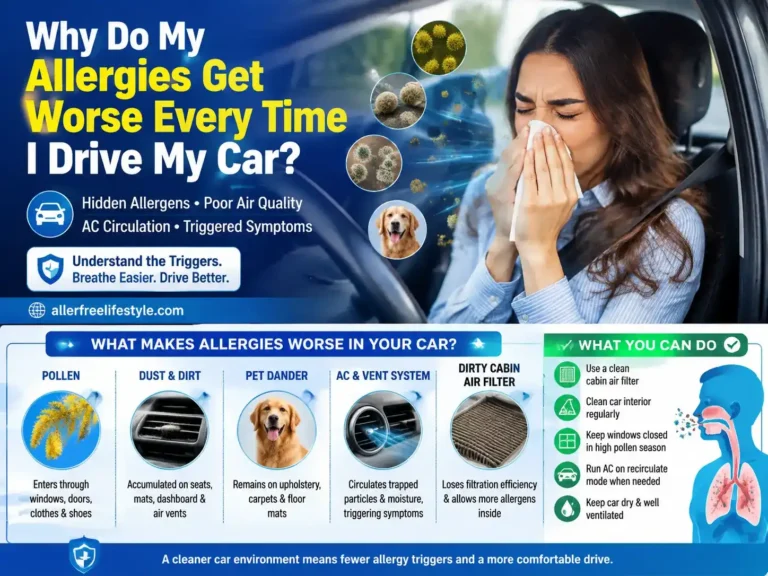
You can reduce potential allergen exposure by improving your vehicle’s environment:
- Replace the cabin air filter according to manufacturer recommendations
- Vacuum carpets and seats regularly
- Clean dust from dashboards and surfaces
- Avoid leaving unnecessary fabric items inside the vehicle
- Keep windows closed during high pollen periods
- Clean pet hair and dander from upholstery
- Address moisture or musty smells promptly
Improving cabin air quality may reduce repeated exposure, especially for people sensitive to environmental allergens.
Key Takeaway: Why do my allergies get worse every time I drive my car?
Your car can become a hidden allergy trigger because it is a small enclosed environment where allergens may accumulate and circulate.
The most common contributors include:
- Pollen brought inside from outdoors
- Dust trapped in the cabin
- Pet allergens
- Mold-related particles
- Ventilation system exposure
- Poor cabin air quality
If your symptoms consistently appear while driving but improve after leaving your vehicle, your car environment may be contributing to your allergy flare-ups.
Recognizing these triggers can help you create a cleaner and more comfortable driving environment.
Medical Disclaimer
This article is intended for educational purposes only and should not replace professional medical advice, diagnosis, or treatment. If your allergy symptoms are severe, persistent, affect your breathing, or do not improve after reducing possible triggers, consult a qualified healthcare professional.
Frequently Asked Questions(FAQs)
1. Why do my allergies get worse in my car?
Your car may contain trapped allergens such as pollen, dust, mold particles, or pet dander that can trigger allergy symptoms when you drive.
2. Can car air conditioning trigger allergies?
Yes. Car air conditioning may circulate airborne particles from the vehicle environment and worsen symptoms in sensitive individuals.
3. Why do I sneeze every time I get in my car?
Sneezing after entering a vehicle may occur due to exposure to allergens accumulated inside the car, including dust, pollen, or pet allergens.
4. Can a dirty cabin air filter make allergies worse?
A poorly maintained cabin air filter may reduce air filtration efficiency and contribute to increased exposure to airborne particles.
5. Why do I get allergy symptoms only when driving?
Symptoms that appear mainly during driving may be related to specific triggers inside the vehicle, such as cabin dust, allergens, ventilation issues, or air quality.
References
- Greiner AN, Hellings PW, Rotiroti G, Scadding GK. Allergic Rhinitis. The Lancet.2011;378(9809):2112–2122. doi:10.1016/S0140-6736(11)60130-X
- D’Amato G, Chong-Neto HJ, Monge Ortega OP, et al. The effects of climate change on respiratory allergy and asthma induced by pollen and mold allergens. 2020;75(9):2219–2228. doi:10.1111/all.14476
- Sato H, Matsumoto K, et al. Biological contaminants and indoor air quality: implications for respiratory health and allergic disease. Environmental Health and Preventive Medicine.2021;26:120. doi:10.1186/s12199-021-01037-2