

The Allergy-Safe Travel Checklist: How to Prevent Hotel Room Allergy Flares
Written by: Dr. Muhammad Ihsan Ullah, PhD
Medically reviewed by: Dr. Jamal ud Din Khan, FCPS
Last updated on September 27, 2026
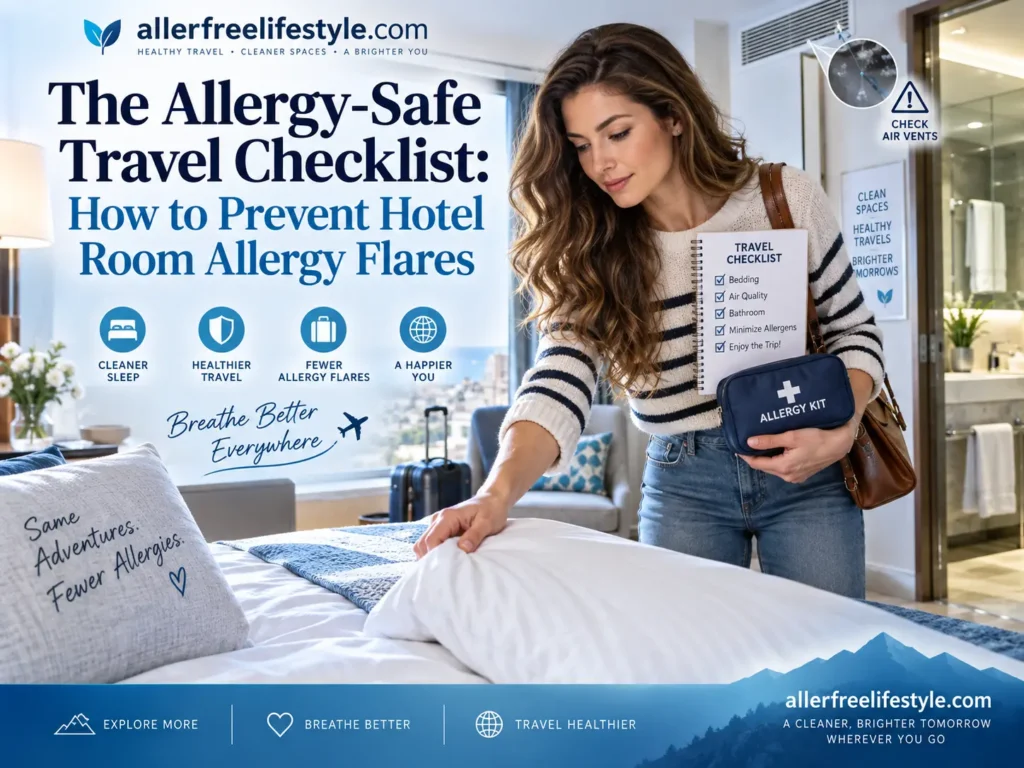
Travelling should be an enjoyable experience, but for people with allergies, a hotel room can sometimes introduce unexpected triggers. Even a room that appears clean may contain hidden allergens such as dust mites, mold spores, pet dander, airborne particles, and chemical fragrances from cleaning products.
People with allergic rhinitis, asthma, or environmental allergies may experience symptoms when exposed to these triggers for several hours, especially while sleeping. Preparing before arrival and knowing what to check after entering a hotel room can help reduce allergen exposure and make travel more comfortable.
Quick answer
To reduce hotel room allergy flares, choose allergy-friendly accommodations when possible, request suitable bedding, inspect the room for dust, moisture, mold, and ventilation issues, avoid allergen-collecting fabrics, improve indoor air quality, and carry essential allergy supplies recommended by your healthcare provider.
How Can I Prevent Allergies in a Hotel Room?
A hotel room can contain allergens in areas that travelers rarely consider. Bedding, carpets, curtains, upholstered furniture, and air-conditioning systems may collect particles that affect sensitive individuals.
Before your trip, planning your accommodation and preparing an allergy travel kit can help lower exposure risks.
Important steps include:
- Requesting a non-smoking room
- Asking about allergy-friendly room options
- Choosing rooms with less carpeting when available
- Informing the hotel about bedding preferences
- Keeping essential medications in your carry-on luggage
The goal is not to create a completely allergen-free environment, which is difficult outside a controlled setting. Instead, the focus should be reducing exposure to common indoor allergens and creating a more comfortable sleeping environment.
Indoor allergens such as dust mites, mould, and animal allergens are recognised contributors to allergic airway symptoms, particularly in individuals with allergic sensitivity (1).
How Do I Make a Hotel Room Allergy Safe Before Sleeping?
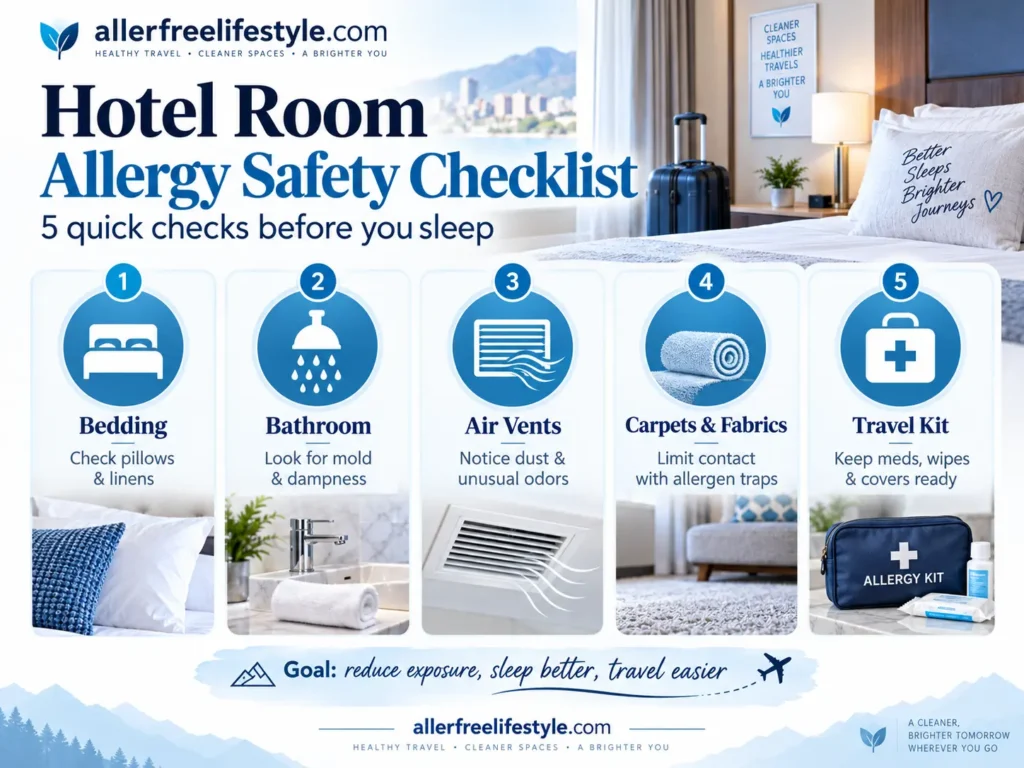
The first few minutes after entering a hotel room are an important opportunity to identify possible allergy triggers. A quick inspection can help you decide whether additional precautions are needed.
Start by checking:
- The bed and bedding condition
- Air-conditioning vents
- Bathroom moisture levels
- Carpet and fabric surfaces
- Strong chemical or fragrance odors
If you notice a musty smell, visible mold, excessive dust, or irritation from room fragrances, consider requesting another room.
Small preventive actions before sleeping may significantly improve comfort because travelers often spend many uninterrupted hours exposed to the hotel environment.
Allergy-Safe Hotel Room Checklist: What Should You Check First?
A systematic hotel room inspection is more reliable than judging cleanliness by appearance alone. Allergens are often microscopic and may remain on surfaces even when a room looks well maintained.
Check the bedding area.
The bed is one of the most important areas to evaluate because prolonged nighttime exposure occurs here.
Inspect:
- Pillows
- Mattress surface
- Comforters
- Decorative blankets
- Fabric headboards
For sensitive travellers, practical steps include:
- Requesting synthetic pillows instead of feather pillows
- Removing decorative bedding before sleeping
- Using a personal pillowcase or protective cover
- Avoiding direct contact between luggage and bedding
Dust mite allergens commonly accumulate in bedding materials because mattresses and pillows provide suitable conditions for mite survival and allergen accumulation (2).
Inspect the bathroom for moisture and mould risks.
Bathrooms can become problematic areas when ventilation is poor or moisture remains trapped.
Look for:
- Musty odours
- Visible mould spots
- Damp walls or surfaces
- Poor airflow
Mould spores can become airborne and may trigger symptoms in individuals who are sensitive to indoor fungal allergens.
If a bathroom has obvious moisture problems, requesting a different room may help reduce exposure.
Examine the HVAC system.
Hotel heating, ventilation, and air-conditioning systems influence indoor air quality. Poor ventilation or contaminated air pathways may contribute to exposure to airborne particles.
Check for:
- Dust around air vents
- Unusual odours when the system starts
- Signs of moisture accumulation
Improving indoor air quality through ventilation, filtration, and source control is an important part of reducing exposure to indoor pollutants (3).
How Do I Avoid Dust Mites While Traveling?
Travelers with dust mite sensitivity can take several practical steps to minimize exposure outside their home environment.
A useful dust mite allergy travel approach includes:
- Packing a protective pillow cover
- Bringing a personal pillowcase
- Keeping luggage away from carpets
- Storing clothes inside bags rather than on upholstered furniture
- Closing suitcases when not in use
Dust mites are difficult to completely avoid because they exist in many indoor environments. However, reducing direct contact with allergen-containing materials can help sensitive travelers manage exposure.
Carpets, upholstered furniture, mattresses, and fabric surfaces can collect allergens over time, making them important areas to consider during hotel stays.
How Can I Find an Allergy-Friendly Hotel Room?
Finding a suitable hotel room begins before arrival. Contacting the property directly allows travellers to ask specific questions about available accommodations.
Useful questions include:
- Do you have allergy-friendly rooms available?
- Are non-feather pillows available?
- Can I request a room with minimal carpeting?
- Are pets allowed in this section of the hotel?
- Are fragrance-free cleaning options available?
A hotel describing a room as “clean” does not necessarily mean it has reduced allergen exposure. Allergy-friendly travel requires attention to environmental factors such as bedding materials, ventilation, moisture control, and indoor air quality.
Some accommodations provide specific allergy-conscious options, but availability and standards vary between hotels, so confirming details before arrival is recommended.
Hotel Room Allergy Risk Assessment: What Areas Need the Most Attention?
Different areas of a hotel room carry different levels of allergen exposure. Understanding common risk areas helps travelers focus their efforts where they matter most.
Hotel Room Area | Common Allergy Triggers | What to Check | Practical Prevention Step |
Bedding and pillows | Dust mites, feather materials, trapped allergens | Pillow type, mattress condition, decorative blankets | Request suitable bedding and use personal covers |
Carpets and curtains | Dust particles, pet allergens, accumulated debris | Flooring type and fabric surfaces | Keep luggage elevated and avoid unnecessary fabric contact |
HVAC system | Airborne particles, dust, moisture-related contaminants | Vent cleanliness and unusual odors | Improve airflow and consider portable filtration |
Bathroom | Mold spores, humidity, damp surfaces | Signs of moisture or poor ventilation | Request another room if mold concerns are present |
Upholstered furniture | Dust and animal allergens | Fabric chairs and sofas | Limit direct contact when possible |
A quick evaluation of these areas can help travelers create a lower-allergen environment without spending excessive time preparing the room.
What Should I Pack for an Allergy-Safe Travel Checklist?
A well-prepared allergy travel kit can reduce stress and help manage unexpected exposure during a trip.
Essential items may include:
Allergy protection supplies
- Personal pillowcase
- Dust mite protective cover
- Cleaning wipes
- Face mask for dusty environments
- Small HEPA air purifier if appropriate
Health-related items
- Prescribed allergy medications
- Nasal medications recommended by a healthcare professional
- Emergency medications if prescribed
- Medication list and healthcare information
Travel comfort items
- Saline spray if recommended
- Laundry bag for used clothing
- Small storage bags for separating clean and used items
Travellers should always follow their healthcare provider’s instructions regarding medication use, especially when managing asthma or severe allergic conditions.
Does a HEPA Air Purifier Help With Hotel Room Allergies?
A portable HEPA air purifier may help improve air quality in a hotel room by reducing certain airborne particles, including some dust, pet dander, and mold-related particles.
However, an air purifier is not a complete solution because it cannot remove allergens already trapped inside mattresses, carpets, pillows, or upholstery.
For travelers who choose to use one:
- Select a true HEPA filtration system
- Choose an appropriate size for the room
- Run the device soon after entering the room
- Keep doors and windows closed when needed for better filtration
Air cleaning devices are considered one part of indoor allergen management, along with ventilation, moisture control, and reducing allergen sources (3).
Can Hotel Rooms Trigger Allergies Even If They Look Clean?
Yes. A room’s appearance does not always reflect its allergen levels. Many allergy triggers are microscopic and cannot be identified by visual inspection.
Potential hidden triggers include:
- Dust mite particles in bedding
- Mold spores from moisture problems
- Pet allergens from previous occupants
- Airborne particles from ventilation systems
- Fragrance chemicals from cleaning products
People with allergic sensitivity may react differently depending on their individual triggers and level of exposure.
A cleaner-looking environment may reduce visible dust, but allergy prevention requires attention to specific allergen sources rather than appearance alone.
How Can I Prevent Allergy Flare-Ups While Traveling?
A complete prevention strategy combines preparation, room selection, and practical habits throughout the stay.
Before booking
- Research accommodation options
- Ask about allergy-related requests
- Confirm bedding preferences
- Pack necessary supplies
After arriving
- Inspect the room before unpacking
- Check bedding and ventilation
- Keep luggage away from carpets
- Remove unnecessary fabric items
Before sleeping
- Use protective bedding if needed
- Keep medications accessible
- Maintain comfortable room conditions
- Avoid known personal triggers
These steps can help travellers with allergic rhinitis, environmental allergies, and asthma-related sensitivities reduce unnecessary exposure during hotel stays.
Final Thoughts: Creating a Safer Hotel Experience with Allergies
Hotel stays do not have to be difficult for people with allergies. While it is impossible to remove every allergen from a shared environment, thoughtful preparation can significantly improve comfort and reduce exposure.
An effective allergy-safe travel strategy focuses on four key areas: choosing accommodations carefully, inspecting the room environment, protecting sleeping areas, and carrying appropriate supplies.
By following a structured hotel room allergy checklist, travelers can feel more confident and spend less time worrying about hidden triggers. Preparation allows the focus to return to what travel is meant to provide: relaxation, exploration, and enjoyable experiences.
Medical Disclaimer
This article is intended for general educational purposes only and does not replace professional medical advice, diagnosis, or treatment. Individuals with severe allergies, asthma, or a history of serious allergic reactions should consult a qualified healthcare professional or allergist for personalized guidance before traveling.
Frequently Asked Questions
How can I make a hotel room safer for allergies?
Choose allergy-friendly accommodations when possible, request suitable bedding, inspect the room for dust and moisture, and reduce exposure to common allergens such as dust mites, mold, and pet dander.
What should I pack for allergy-safe travel?
Carry essential allergy supplies such as prescribed medications, protective pillow covers, personal pillowcases, cleaning wipes, and other items recommended by your healthcare provider.
Can hotel rooms trigger allergy flare-ups?
Yes. Hotel rooms may contain hidden allergens from bedding, carpets, ventilation systems, cleaning products, and previous guests’ pets.
Should I bring an air purifier to a hotel room?
A portable HEPA air purifier may help reduce airborne particles such as dust and pet allergens, especially for travelers who are sensitive to indoor air quality issues.
What should I check first when entering a hotel room with allergies?
Inspect the bedding, check for moisture or musty odors, look at air vents, and avoid placing luggage directly on carpets or upholstered furniture.
References
- Institute of Medicine (US) Committee on Damp Indoor Spaces and Health. Damp Indoor Spaces and Health. Washington, DC: National Academies Press; 2004. doi:10.17226/11011
- Calderón MA, Linneberg A, Kleine-Tebbe J, et al. Respiratory allergy caused by house dust mites: What do we really know? Journal of Allergy and Clinical Immunology. 2015;136(1):38-48. doi:10.1016/j.jaci.2015.03.019
- American Academy of Allergy, Asthma & Immunology (AAAAI). Indoor Allergens and Their Impact on Allergic Disease. Updated guidance on indoor allergen avoidance and environmental control. Available from: https://www.aaaai.org/conditions-treatments/library/allergy-library/indoor-allergens