

Why Do Seasonal Allergies Make Me Feel Dizzy and Lightheaded?
Written by: Dr.Muhammad Ihsan Ullah, PhD
Medically reviewed by: Dr. Jamal ud Din Khan, FCPS
Last updated on August 17, 2026

Feeling dizzy or lightheaded during allergy season can be confusing and frustrating. Many people expect seasonal allergies to cause only sneezing, itchy eyes, or a runny nose, but allergic reactions can affect several connected systems in the body, including the nose, sinuses, ears, and immune system.
If you notice that dizziness appears during periods of high pollen exposure or alongside allergy symptoms, you may wonder whether your seasonal allergies are contributing to that unsteady feeling.
The relationship between allergies and dizziness is not always straightforward. Seasonal allergies do not directly cause dizziness in everyone, but the inflammation, congestion, and changes associated with allergic reactions may contribute to dizziness or lightheadedness in some individuals.
Quick Answer: Why Allergy Season May Leave You Feeling Dizzy
Seasonal allergies may contribute to dizziness or lightheadedness in some people because the body’s allergic response can affect multiple systems involved in comfort, breathing, and balance. However, dizziness during allergy season can also have other causes, so persistent or severe symptoms should be evaluated.
Can Seasonal Allergies Cause Dizziness?
Yes, seasonal allergies can contribute to dizziness in some individuals, especially when allergy symptoms are intense.
When the body encounters allergens such as pollen, grass, mold, or other environmental triggers, the immune system may activate an allergic response. During allergic rhinitis, allergen exposure stimulates IgE antibodies and mast cells, causing the release of inflammatory mediators such as histamine. These changes contribute to nasal swelling, mucus production, and congestion (1).
Although the immune response begins mainly in the nasal passages, the effects can extend to nearby structures involved in pressure regulation and balance.
Some people may experience:
- A lightheaded sensation
- Feeling unsteady
- A “foggy” feeling
- Difficulty concentrating
- A sense of imbalance during allergy flare-ups
Why Do Seasonal Allergies Make Me Feel Dizzy and Lightheaded?
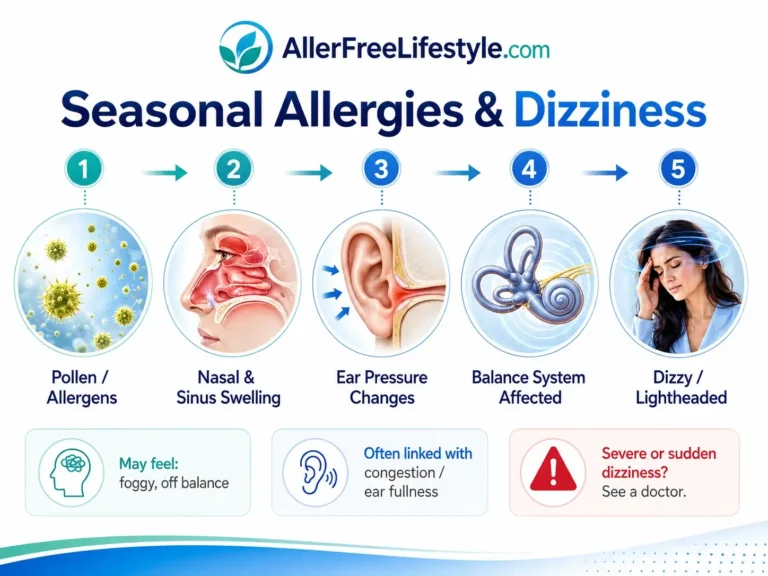
Seasonal allergy dizziness usually develops because several factors can occur together during an allergic reaction.
Nasal and sinus inflammation
Allergies can cause swelling inside the nasal passages and increase mucus production. This congestion may create pressure sensations around the face, forehead, and head.
Some people describe this as:
- Heavy-headedness
- Feeling spaced out
- Difficulty focusing
- Mild lightheadedness
Changes affecting the ear and balance system
The Eustachian tubes connect the middle ear with the back of the nose and help regulate pressure. When allergy-related inflammation affects the upper airway, these tubes may not work as efficiently.
Changes in pressure around the middle ear may contribute to:
- Ear fullness
- A sensation of imbalance
- Feeling unsteady
The inner ear contains the vestibular system, which plays an important role in maintaining balance.
Can Allergies Make You Feel Lightheaded or Off Balance?
Yes, some people experience lightheadedness or an off-balance sensation during allergy season.
This feeling is different from true spinning vertigo. Allergy-related imbalance is often described as:
- Feeling unstable while walking
- Feeling disconnected from surroundings
- Mild dizziness when moving the head
- Difficulty feeling completely steady
These sensations may occur because allergy symptoms affect comfort, pressure regulation, sleep quality, and overall physical well-being.
Can Sinus Allergies Cause Dizziness and Balance Problems?
Sinus allergies may contribute to dizziness when inflammation and congestion become significant.
Allergic inflammation can affect:
- Nasal passages
- Sinus drainage pathways
- Pressure regulation near the ears
When congestion interferes with normal pressure balance, some individuals may notice dizziness along with:
- Sinus pressure
- Facial discomfort
- Nasal blockage
- Ear pressure
- Postnasal drip
However, dizziness is not always caused by sinus allergies. Other conditions involving the inner ear, medications, hydration, blood pressure, or neurological factors may also cause similar symptoms.
Can Pollen Allergies Cause Dizziness?
Yes, pollen allergies may contribute to dizziness in sensitive individuals.
During pollen seasons, airborne allergens such as:
- Tree pollen
- Grass pollen
- Ragweed pollen
can trigger allergic rhinitis.
The severity of symptoms depends on:
- Individual allergy sensitivity
- Amount of pollen exposure
- Duration of exposure
- Strength of the immune response
Some people notice dizziness mainly during certain seasons because their symptoms follow specific environmental triggers.
Can Postnasal Drip Make You Feel Lightheaded?
Postnasal drip occurs when excess mucus from the nasal passages moves down the back of the throat.
During allergy flare-ups, increased mucus production may lead to:
- Frequent throat clearing
- Coughing
- Poor sleep
- Throat irritation
While postnasal drip itself is not a common direct cause of dizziness, the overall effect of persistent congestion, disrupted sleep, and feeling unwell may contribute to lightheadedness in some individuals.
Does Histamine Cause Dizziness During Allergy Season?
Histamine is one of the major chemicals involved in allergic reactions.
When allergens activate mast cells, histamine contributes to:
- Nasal inflammation
- Increased mucus production
- Blood vessel changes
- Allergy symptoms
In some people, the overall effects of histamine-driven inflammation may be associated with fatigue, discomfort, or dizziness-like sensations.
It is also important to remember that some antihistamine medications used for allergies can cause drowsiness or dizziness in certain individuals.
Why Do I Feel Dizzy Only During Allergy Season?
If dizziness appears mainly during specific months, seasonal allergens may be a possible contributing factor.
A pattern may include:
- Symptoms appearing when pollen counts rise
- Improvement when exposure decreases
- Dizziness occurring alongside sneezing, congestion, or itchy eyes
Keeping track of when symptoms occur can help identify possible triggers.
Useful things to note include:
- Time of year symptoms appear
- Outdoor exposure
- Weather conditions
- Allergy symptom severity
How Can Allergy-Related Dizziness Be Reduced?
Reducing allergy exposure and controlling inflammation may help decrease allergy-related discomfort.
Helpful approaches include:
- Limiting outdoor exposure during high pollen periods
- Keeping windows closed when pollen levels are high
- Showering after spending time outdoors
- Washing bedding regularly
- Reducing indoor allergens such as dust mites
- Maintaining good hydration
For allergic rhinitis, treatments such as antihistamines or intranasal corticosteroids may be recommended based on individual symptoms and medical assessment (2).
When Should You See a Doctor About Allergy-Related Dizziness?
Although seasonal allergies can contribute to dizziness, persistent or severe symptoms should not automatically be attributed to allergies.
Seek medical evaluation if dizziness:
- Is sudden or severe
- Causes fainting
- Interferes with daily activities
- Occurs with chest pain
- Is associated with weakness, confusion, or neurological symptoms
- Continues despite allergy management
A healthcare professional can determine whether symptoms are related to allergies, inner ear conditions, medication effects, or another underlying cause.
Medical Disclaimer
This article is intended for educational purposes only and does not replace professional medical advice, diagnosis, or treatment. Dizziness and lightheadedness can have many possible causes, including allergies and conditions unrelated to allergies. If symptoms are severe, persistent, sudden, or concerning, consult a qualified healthcare professional for proper evaluation.
Frequently Asked Questions (FAQs)
1. Can seasonal allergies make you dizzy and lightheaded?
Yes, seasonal allergies may contribute to dizziness or lightheadedness in some people, especially during periods of increased pollen exposure and allergy flare-ups.
2. Why do allergies make me feel off balance?
Allergies may affect balance sensations through nasal congestion, sinus pressure, and inflammation near structures involved in maintaining balance.
3. Can pollen allergies cause dizziness?
Yes, pollen allergies can trigger an immune response that may contribute to dizziness, fatigue, or a feeling of being unsteady in some individuals.
4. Can sinus allergies cause dizziness?
Sinus allergies may contribute to dizziness when congestion and inflammation affect pressure regulation around the head and ears.
5. Can postnasal drip make you feel lightheaded?
Postnasal drip may contribute to feeling unwell or lightheaded in some people, especially when it affects sleep, comfort, or overall allergy symptoms.
6. When should I see a doctor for allergy-related dizziness?
Seek medical advice if dizziness is severe, sudden, persistent, affects daily activities, or occurs with symptoms such as fainting, chest pain, or neurological changes.
References
- Bousquet J, Anto JM, Bachert C, et al. Allergic rhinitis. Nature Reviews Disease Primers.2020;6:95.
doi: 10.1038/s41572-020-00227-0 - Dykewicz MS, Wallace DV, Amrol DJ, et al. Rhinitis 2020: A practice parameter update. Journal of Allergy and Clinical Immunology.2020;146(4):721-767.
doi: 10.1016/j.jaci.2020.07.007 - Seidman MD, Gurgel RK, Lin SY, et al. Clinical practice guideline: Allergic rhinitis. Otolaryngology–Head and Neck Surgery.2015;152(1 Suppl):S1-S43.
doi: 10.1177/0194599814561600